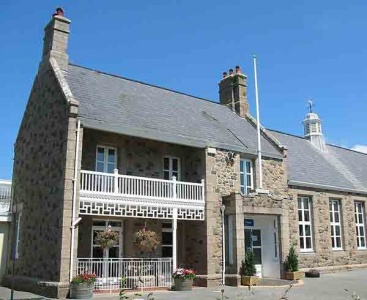
La Moye School

La Moye School

La Moye School under construction
La Moye School was opened on 23 July 1902 in the presence of the Rector of the Parish of St Brelade, the Rev J A Balleine. It was one of 14 parish-run schools taken over by the States in 1913
The first headmaster was George Boomer, assisted by his wife. There were three classrooms, but such was the demand for places once the States had taken over that there were eight pupils to a desk. The Boomers lived in the house attached to the school.
Mr Boomer was a keen golfer and established La Moye Golf Club.
School log
The school handbook records that the first entry in the school log was:
"Forty eight children were admitted, of whom eight were considered as fit for the third standard and about as many others could read a little and do addition sums. The remainder never having been to school, were quite ignorant and most of them did not understand English. The parents were highly delighted at the opening of a school in their neighbourhood and brought their children clean and tidy."
Headteachers
- 1902-1915 G Boomer
- 1915-1927 Miss A Messervy
- 1927-1940 Mrs B Godfray
- 1940-1942 R Foote
- 1942-1952 Mrs B Godfray
- 1952-1975 C Miller
- 1975-1991 H Fauvel
- 1991-1996 Mrs J Gueno
- 1997-2001 J Speight
- 2001-2008 Mrs A Taylor
- 2009- Mrs J Bell-Cook
History
This history is based on a Jersey Heritage presentation in 2025 in their 'What's your school's story? series
La Moye School was one of nine parish schools that were built around the turn of the 20th century following the introduction of compulsory education in 1894 for children aged 5 to 12.
In July 1900 the Parish of St Brelade accepted a plan and estimate for the building of an elementary school at La Moye, prepared by architect Mr R T Lloyd. In December 1900 the tender of Dart and Sons, builders from St Aubin, was accepted and construction began soon after.
The parish initially purchased land on the west portion of Clos Orange from Albert Le Gallais, which was to be the site of the new school. When the foundations were dug, they immediately filled with water, so the site of the school had to change. The parish purchased more land from Mr Le Gallais, this time on the east portion of Clos Orange. The total cost of construction came to £2,987.05.
Opening
La Moye School was opened on Monday 23 July 1902, with Adelaide Le Bailly the very first pupil recorded in the school admission register. The school’s first headmaster was George Boomer, a keen golfer who had previously served as a head of Grouville Central School, where he taught (in both an academic and sporting sense) future champion golfers Harry Vardon and Ted Ray. Boomer’s love of golf was undoubtedly an influence in the decision to leave Grouville and move across the Island to take up the role at La Moye.
Boomer’s first entry in the new school’s logbook reads as follows: 'Forty-eight children were admitted, of whom eight might be considered as fit for the third standard and about as many others could read a little and do addition sums. The remainder, never having been to school, were quite ignorant and most of them did not understand English. The parents were highly delighted at the opening of a school in their neighbourhood and brought their children clean and tidy.'
Mr Boomer: golf, chickens and dismissal
Having reportedly been refused admission to join the Royal Jersey Golf Club, not long after arriving in La Moye to take up his post, Boomer laid out some rudimentary holes on the sand dunes and established La Moye Golf Club near the school.
He was known to play golf during school hours, sometimes even enlisting pupils as caddies. His chickens also became a talking point, not only wandering freely inside the school, but also causing complaints for damaging nearby tomato crops.
During these early years the school was criticised for inadequate staffing and, in particular, poor attendance. Pupils were frequently absent for agricultural work, illness, and even events like the Battle of Flowers. By 1915, the situation had deteriorated to such an extent that inspectors labelled La Moye the ‘worst school in the island’. Mr Boomer was dismissed shortly afterwards.
Miss Messervy and Mrs Godfray
Following Mr Boomer’s dismissal, Alice Messervy became headteacher, and worked hard to improve the school despite continued issues with poor attendance. She did not hold back in her criticism of both parents and pupils, openly recording bad behaviour and truancy in the logbook. Though strict with discipline, Miss Messervy also began recognising academic success among pupils.
Her successor in 1927, Bessie Godfray, was praised for her leadership and teaching. She continued to raise standards, with several pupils achieving distinctions and scholarships. Inspectors noted major improvements, especially in English skills, despite most pupils speaking Jersey French at home.
Under Mrs Godfray, attendance improved with the help of a new transport scheme, and the school saw building upgrades. La Moye became a junior school in 1936 to manage overcrowding. Mrs Godfray continued at the helm at the start of the Second World War, but had to transfer in 1940 when German restrictions made her commute from St Ouen too difficult.
Occupation years
In 1940, Reginald Foote took over from Mrs Godfray, and oversaw the move to cramped, unheated rooms at L’Harmonie after the Germans requisitioned the school building. Supplies were scarce, lessons were disrupted by air raid practices and military activity, and soup was served despite being described as 'most unpalatable'.
In late 1942, Mr Foote, as English-born, was deported with his family to Biberach Internment Camp, where he continued to teach fellow campmates. Back home, Mrs Godfray returned as headteacher, navigating poor conditions, children without shoes, and her husband’s terminal illness, while still managing to keep the school running.
The return to the school building in 1944 brought some relief, and after Liberation in 1945, La Moye celebrated with long-missed treats, a royal visit, and the joy of freedom.
Sporting prowess
After the war, La Moye gradually returned to normality, though the scars of Occupation lingered. In 1946, children replanted trees around the playground to replace those uprooted by the Germans, and Red Cross clothing was still being distributed.
Academic standards soon flourished again, with pupils winning scholarships and school reports praising the warm, family atmosphere. Mrs Godfray retired after 24 years as headteacher in 1953, and was succeeded by Cyril Miller, who brought renewed focus to sports.
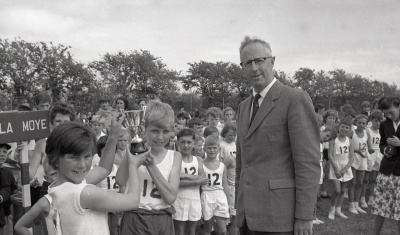
Under Mr Miller’s leadership, La Moye thrived in athletics, football, and cricket. The school went on to dominate the Junior Country Schools Sports Day, winning the J J Le Marquand Trophy multiple times between 1953 and 1962.
A playing field was added, a travel club was launched, and new classrooms were built to accommodate growing numbers. Notable sporting alumni included footballers Chris Jones and Dave Huson, cyclist Wally Rowe, and golfer Aubrey Boomer, son of the school’s first headmaster.
A school in full voice
After Mr Miller’s retirement in 1975, Hugh Fauvel took over as headmaster and La Moye continued to thrive. The school made headlines for its strong music provision, with a 35-piece orchestra and a choir of over 50, led by Michael Higgins. The choir performed across the Island and sang at the Opera House alongside a visiting Welsh male voice choir.
Field trips and creative learning became a hallmark of this era, from exploring prehistoric sites to building a life-size model calf as part of an Royal Jersey Agricultural and Horticultural Society project. La Moye pupils also engaged with contemporary issues, writing letters to the Falklands Task Force and raising awareness of littering through poetry and posters.
As numbers grew, a 1984 extension added much-needed classrooms – an event turned into a science lesson when pupils tested bricks by dropping them from the roof. Today, La Moye School has around 360 pupils, from nursery through to year 6, a far cry from the small provision which opened in 1902.

-
-
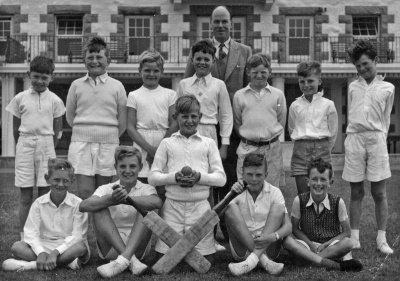 The school cricket team in 1958
 -
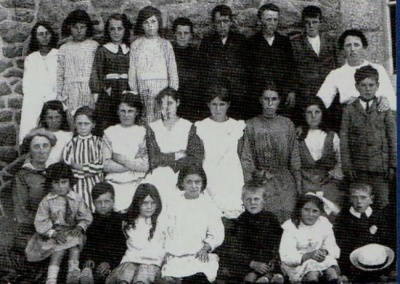 Pupils in 1919
 -
 Pupils in 1927
 -
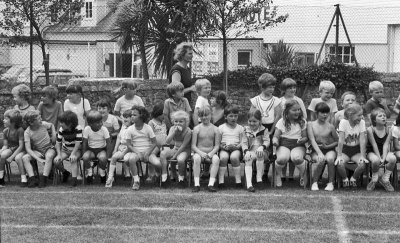 Sports day in 1981
 -
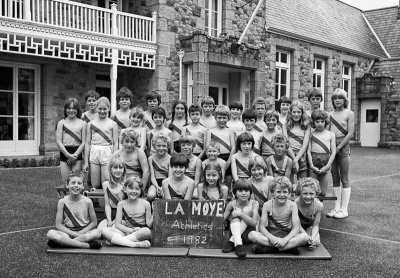 Athletics team, 1982
 -
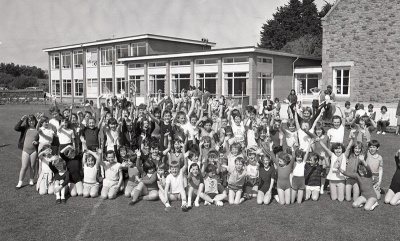
-
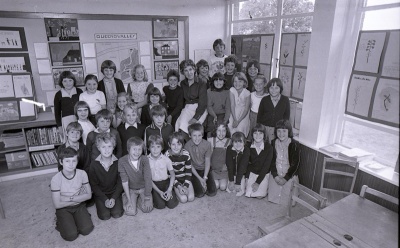
-
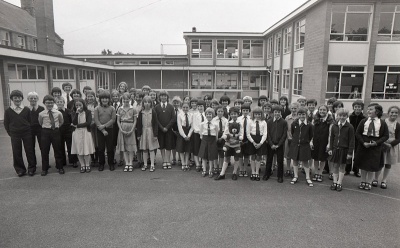 School choir in July 1980
 -
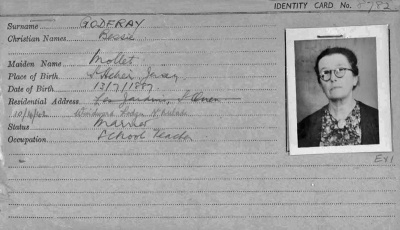 Headmistress Bessie Godfray's Occupation registration card
 -
-
-
-
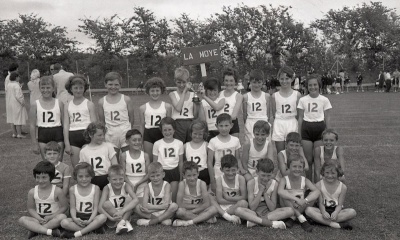 The school team won the Le Marquand Cup at Junior Country School Sports Day, June 1962. Team captains Heidi Langlois and Rob Shipley are holding the trophy
 -
-
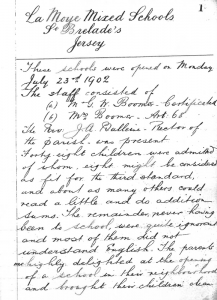 The original headmaster's logbook